
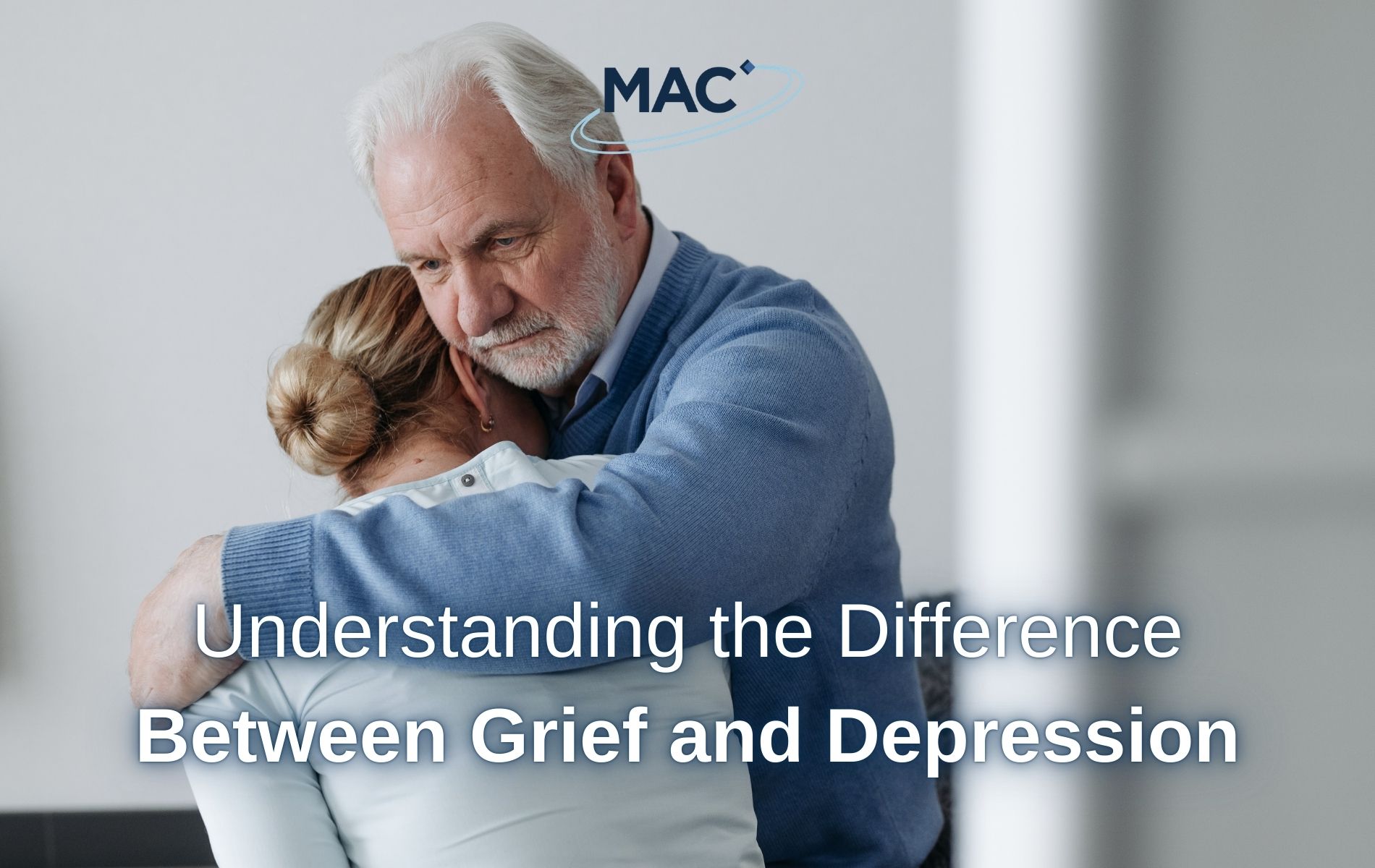
When faced with death or dying, many people experience profound emotional responses, in particular grief and depression. While they are distinct, the overlap between these experiences can complicate the grieving process and leave individuals feeling isolated and misunderstood.
What is grief?
Grief is a natural, multifaceted response to loss. It is complex and often overwhelming for many, encompassing a wide range of emotions, from sadness and anger to confusion and even relief. Grief can affect us emotionally, mentally, and physically, such as through fatigue, insomnia, or loss of appetite.
Approximately one-third of adults over 40 reports that they have experienced severe grief after the loss of a loved one1.
The grieving process is unique and has no definitive timeline or “correct” way to mourn. Some may feel their loss acutely long after their loved one’s death, while others find their grief gradually softening with the passage of time.
Understanding depression
Depression is a mental health condition characterised by persistent sadness, lack of interest or pleasure in activities, and feelings of hopelessness. Around 1 in 6 people in the UK say they have experienced moderate to severe symptoms of depression2.
Where grief often comes in waves and can include moments of joy or comfort, depression tends to be more constant and all-consuming.
Depression can strip away the ability to feel anything at all, also known as anhedonia, leaving only numbness and despair. It often interferes with daily life, making simple tasks feel overwhelming or impossible; up to 70% of people living with depression experience this symptom3.
The overlap between grief and depression
When someone is grieving, symptoms of depression can emerge or intensify. This overlap is often referred to as ‘complicated grief’ or ‘prolonged grief disorder’ when an individual becomes stuck in the mourning process and is prevented from healing. Up to 10% of people who are grieving go on to develop prolonged grief disorder4.
Those who have a history of depression may be more likely to develop prolonged grief disorder and may experience more intense or prolonged grief following a loss4. This overlap can be particularly challenging because it can be hard to distinguish between natural grief and clinical depression.
How to tell grief and depression apart
It’s natural for grief to bring about sadness, exhaustion, and even withdrawal from normal activities. However, there are some key differences to be aware of:
Grief:
- Often involves a mix of emotions, including moments of joy and recollecting positive memories, even when sad.
- Usually becomes less intense over time.
Depression:
- Tends to feel all-encompassing and relentless, with little to no relief from feelings of hopelessness.
- When left untreated, symptoms remain constant or worsen.
If symptoms persist beyond what feels manageable or begin to interfere with daily functioning, such as changes in appetite or sleep issues, it may be a sign of depression.
Seeking support is a strength
Recognising when to seek help is critical. Opening up to trusted friends or family members, joining bereavement support groups, or speaking with a mental health professional can help with the healing process. Compassionate listening and understanding are essential but so is acknowledging when additional support is needed.
At MAC, we want to contribute towards breaking down the stigma surrounding death, dying, and grief. Conversations about mental health and bereavement are vital components of this effort.
Treatment and support options
For those experiencing both grief and depression, treatment options such as therapy, counselling, and in some cases, medication, can be effective. However, research has shown that half of those living with depression do not benefit from existing medications, such as antidepressants5.
Here at MAC Clinical Research, we want to improve quality of life for people living with depression. We are conducting a study to test an investigational medication for treatment-resistant depression (depression that has failed to respond fully to more than one medication). If eligible, you may receive up to £2,250 for taking part in this study.
To learn more about this clinical trial and register your interest, visit our treatment-resistant depression study webpage.
References
1 European Journal of Psychotraumatology – The prevalence of severe grief reactions after bereavement and their associations with mental health, physical health, and health service utilization: a population-based study
2 Office for National Statistics – Cost of living and depression in adults, Great Britain: 29 September to 23 October 2022
3 International Journal of Neuropsychopharmacology – Anhedonia is associated with a specific depression profile and poor antidepressant response
4 American Psychiatric Association – Prolonged Grief Disorder
5 British Journal of Psychology Bulletin – Against the stream: Antidepressants are not antidepressants – an alternative approach to drug action and implications for the use of antidepressants