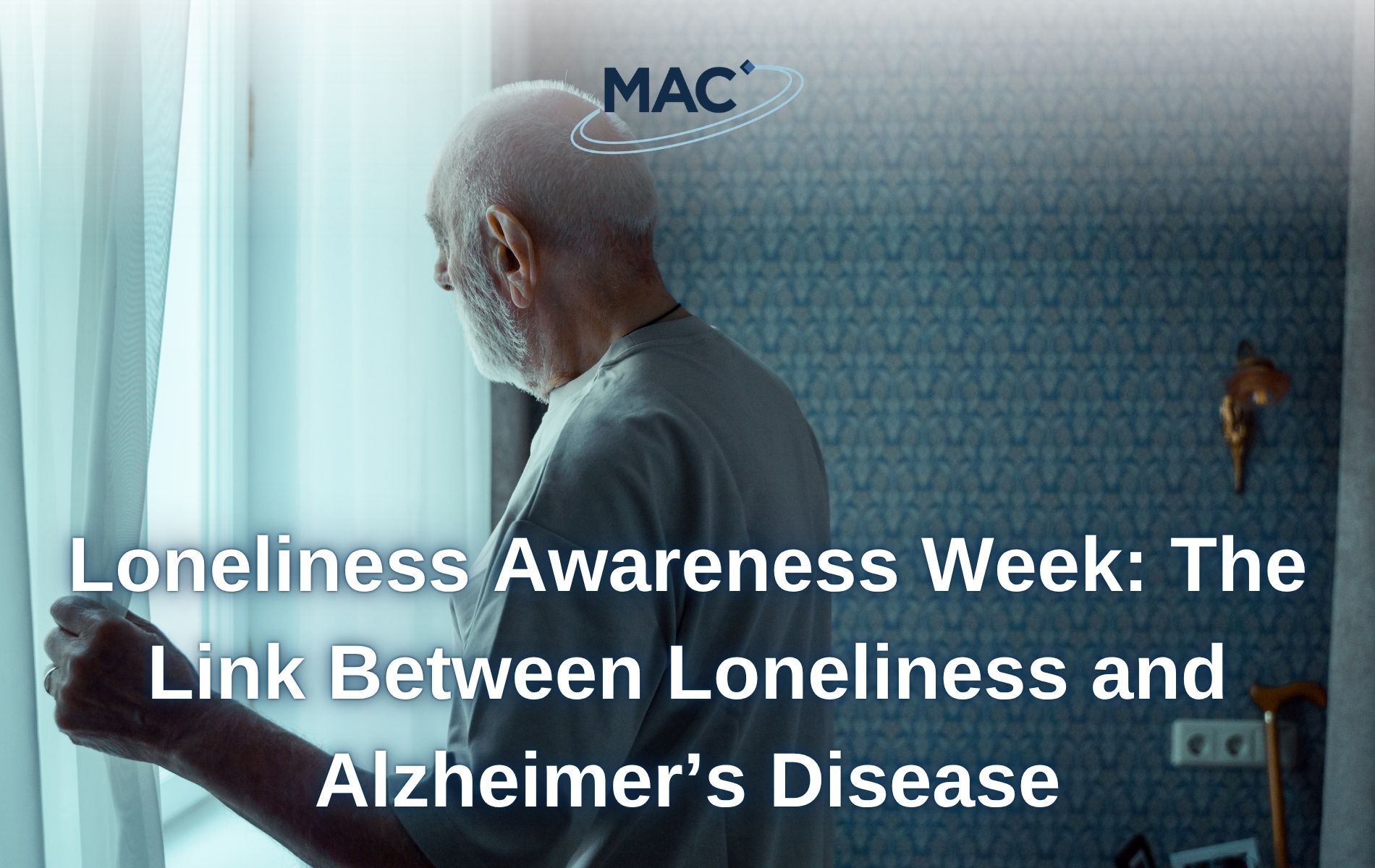
Loneliness can increase the risk of Alzheimer’s Disease by 14%1. For Loneliness Awareness Week, we’re exploring the link between Alzheimer’s and loneliness, both significant public health concerns that can have devastating effects on individuals and communities.
The Impact of Loneliness
There is a difference between loneliness and social isolation:
- Loneliness is the distressing feeling of having fewer or lower quality social interactions than one desires.
- Social isolation is the lack of social contacts and having few people to regularly interact with.
People can live alone and not feel isolated and conversely can feel lonely while being with others. Both loneliness and social isolation are known to pose health risks in older adults1.
A report by the charity Campaign to End Loneliness found that almost 50% of adults (around 26 million people) in the UK reported feeling lonely occasionally, sometimes, often or always, and 7% of people in Great Britain (nearly four million) experience chronic loneliness, meaning they feel lonely often or always2.
Chronic loneliness has been linked to numerous adverse health outcomes, including increased risks of cardiovascular disease, depression, and a weakened immune system.
Social Isolation and the Elderly
According to the NHS, more than two million people in England over 75 live alone. More than a million older people say they go over a month without speaking to a friend, neighbour, or family member3.
For older adults, social isolation is particularly concerning. Many face life changes such as retirement, the death of loved ones, and reduced mobility, which can significantly diminish their social interactions. Without adequate social support, the risk of experiencing loneliness and its associated health problems rises sharply, with one of the main concerns being dementia.
Dementia is an umbrella term for a range of cognitive impairments that interfere with daily life and worsen over time. It affects memory, thinking, orientation, comprehension, calculation, learning capacity, language, and judgement.
Dementia and Social Isolation
Studies have shown that healthy adults aged 50+ who experience prolonged loneliness and social isolation have an up to 60% higher risk of developing dementia than individuals who do not experience loneliness or social isolation5.
Lack of social engagement can lead to reduced cognitive stimulation, which is crucial for brain health. Engaging in social activities, conversations, and community involvement helps maintain cognitive function and delay the onset of dementia symptoms.
Those already living with dementia may withdraw from social interactions due to difficulties in communication, memory lapses, and the stigma associated with the condition. Friends and family members may also distance themselves, unsure how to interact with someone who has dementia. This social withdrawal can exacerbate feelings of loneliness and isolation, creating a harmful cycle that can further deteriorate mental and emotional health.
In a survey conducted with people living with dementia, 30% of people reported feeling moderately lonely and 5% severely lonely6.
Breaking the Loneliness Cycle
Seeking help for loneliness follows a need to change that may not be readily adopted by someone who is lonely and feeling isolated. Identifying loneliness within oneself or a loved one can be challenging, as feelings of pride and stigma present difficult hurdles to overcome. However, there are opportunities for those wanting to break out of the cycle:
- Community Programmes – Community centres, clubs, and social groups, such as Men’s Sheds and Knit and Natter groups, can provide opportunities for meaningful engagement.
- Education and Awareness – Educating the public about dementia and social isolation can help reduce stigma and encourage supportive interactions. Awareness campaigns can help people understand the importance of maintaining connections with those affected by dementia.
- Support for Caregivers – Caregivers play a crucial role in the lives of those with dementia. According to Age UK, 19% of carers over the age of 65 felt lonely because of the care or support they provide, and 14% had not been able to access the support they needed7. Providing them with resources, training, and emotional support can help them maintain their own social connections and better support their loved ones.
- Technology – Technology can be used to facilitate social interactions. Virtual social platforms, video calls, and online communities can help bridge the gap for those with mobility issues or who live in remote areas.
Lonely and Worried about Memory?
Understanding the connection between loneliness and dementia can help us develop better strategies to support those affected and foster a more compassionate society. Loneliness Awareness Week is an opportunity to recognise and address this connection.
Here at MAC Clinical Research, we provide free memory tests for over 50’s through our Memory Assessment Clinics, and we are looking for people who would like to take part in a clinical trial researching a potential new treatment for Alzheimer’s Disease. If you are aged 50 to 85 and have mild to moderate Alzheimer’s, you may be eligible to participate in our Alzheimer’s clinical trial.
You may be compensated for your time and commitment; plus, reasonable travel expenses will be reimbursed or transport provided for you and a caregiver/study partner.
To learn more or register your or a loved one’s interest in Alzheimer’s research, please visit our Alzheimer’s research page.
- National Institute on Ageing – Loneliness linked to dementia risk in large-scale analysis
- Campaign to End Loneliness – Facts and Statistics
- NHS – Loneliness in Older People
- Alzheimer’s Society – How many people have dementia in the UK
- PubMed Central – The impact of loneliness and social isolation on cognitive ageing
- PubMed – Prevalence and determinants of loneliness in people living with dementia
- Age UK – You are not alone in feeling lonely