
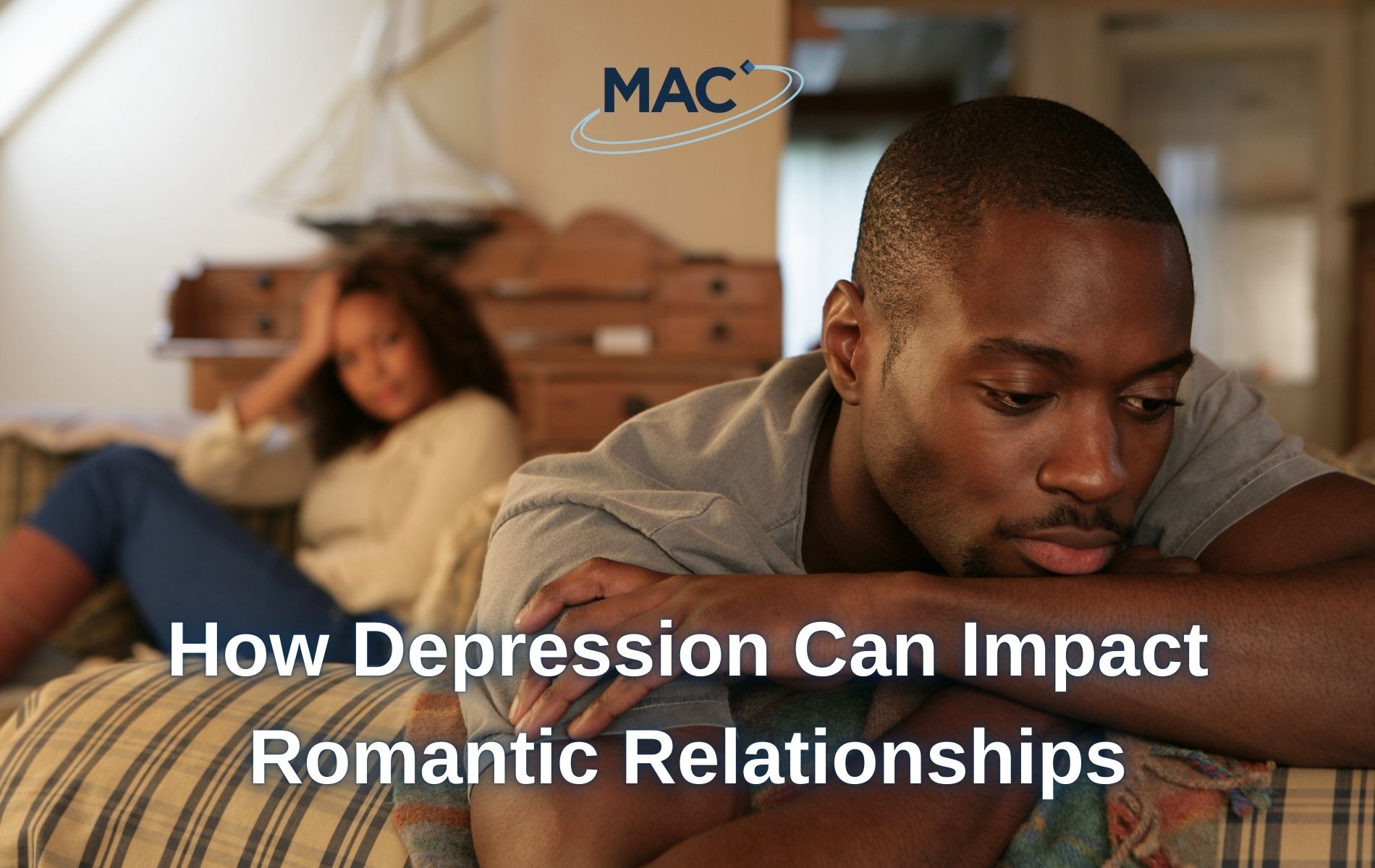
Valentine’s Day often brings images of happy couples, but for many, the day can feel different, especially when one partner is living with depression.
Understanding how depression impacts romantic relationships can help couples navigate the difficult moments with more compassion and connection.
Understanding Depression
Depression is a mental health condition characterised by persistent sadness, lack of interest or pleasure in activities, and feelings of hopelessness. Around 1 in 6 people in the UK say they experienced moderate to severe symptoms of depression1.
Unlike grief, which often comes in waves and can include moments of joy or comfort, depression tends to be more constant and all-encompassing.
The Numbing Aspect of Depression
People experiencing depression often describe feeling emotionally numb or disconnected from themselves, otherwise known as anhedonia. It’s thought that around 75% of people living with depression experience this side effect2.
This affects how they show up in their relationships. A partner who once seemed affectionate and expressive may withdraw, struggle to engage, or seem indifferent.
Depression can distort thinking, too. Someone may believe they’re a burden, that their partner deserves better, or that the relationship is failing. Without understanding these shifts, partners can misinterpret them as rejection rather than symptoms of depression.
Communication Can Become More Difficult
Depression often makes communication harder. The person who is struggling may find it difficult to express their feelings and confide in their partner. Meanwhile, the partner may feel confused and unsure of how to help.
This misalignment can create a cycle: depression leads to withdrawal, withdrawal leads to misunderstandings, and misunderstandings deepen feelings of isolation on both sides.
Gentle, patient communication, which is free of pressure or blame, can help break that cycle. Simple check-ins, validating language, or offering presence without expecting a response can ease the pressure on both partners.
Mounting Everyday Responsibilities
Depression affects energy levels and executive functioning, making daily tasks like cooking and cleaning feel overwhelming. As a result, one partner may end up carrying more of the practical load. Although this imbalance is often temporary, it can put strain on the relationship if it goes unaddressed. Clear conversations and shared expectations can prevent resentment.
Intimacy Can Decrease
Depression can lower interest in physical affection. In women living with depression especially, up to 82% of women living with the condition report a loss of libido3.
This can be confusing for the partner who doesn’t experience the illness, especially if intimacy once felt natural and easy. It’s important to remember that intimacy isn’t gone forever, it’s simply challenged.
Is your partner living with depression?
Here at MAC, we are conducting a research study for a potential alternative treatment for treatment resistant depression (TRD).
You may be eligible to participate in this trial if you have tried between one and three antidepressant medications at a stable dose for at least 6 weeks (including your current one, if taking) which have not resolved at least 50% of your symptoms.
If your symptoms are not more than 50% resolved from having tried between one and three depression medications (this can include your current medication if you are taking one) having been on a stable dose for at least six weeks, you may be able to take part. For more information, visit our Treatment Resistant Depression research webpage.
Participants who qualify for the trial may receive up to £3520 for taking part in this study, plus reasonable travel expenses or transport provided for visits to the MAC clinic.
1 Office for National Statistics – Cost of living and depression in adults, Great Britain: 29 September to 23 October 2022
2 International Journal of Neuropsychopharmacology – Anhedonia is associated with a specific depression profile and poor antidepressant response
3 Frontiers in Psychiatry – Prevalence of sexual dysfunction and its association with psychological symptoms in drug-naive major depressive disorder patients in West China